PAPA FACEBOOK GROUP
This group is dedicated to plein air painting in Australia. Members are welcome to share Australian subjects painted outdoors, engage respectfully, and support fellow artists.
- Plein air work should be painted on location (studio touch-ups are fine — just note them).
- Studio work must clearly relate to your plein air practice, include the study in the post where possible.
- Overseas works are allowed only for Australian artists and must be labelled “Aussie Overseas”.
- International members are welcome to engage but not post non-Australian work.
- Plein air–related events and workshops may be promoted in moderation.
Moderators may remove posts that don’t align with the group’s purpose.
Equipment
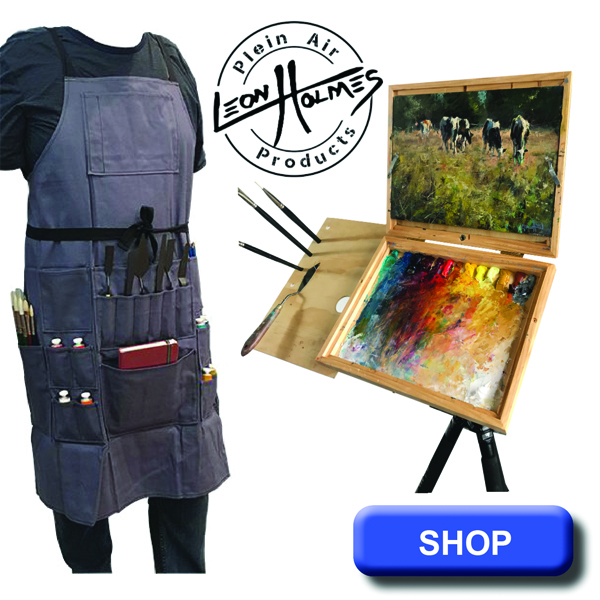
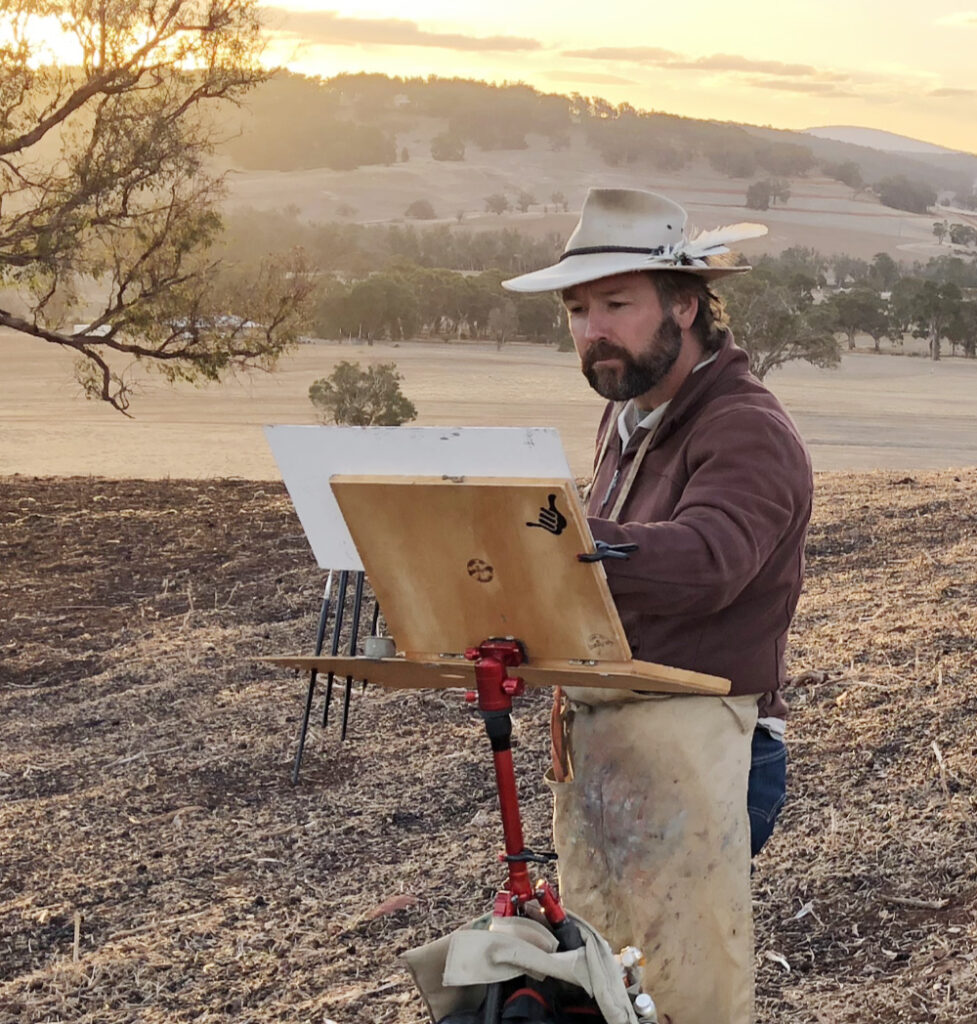
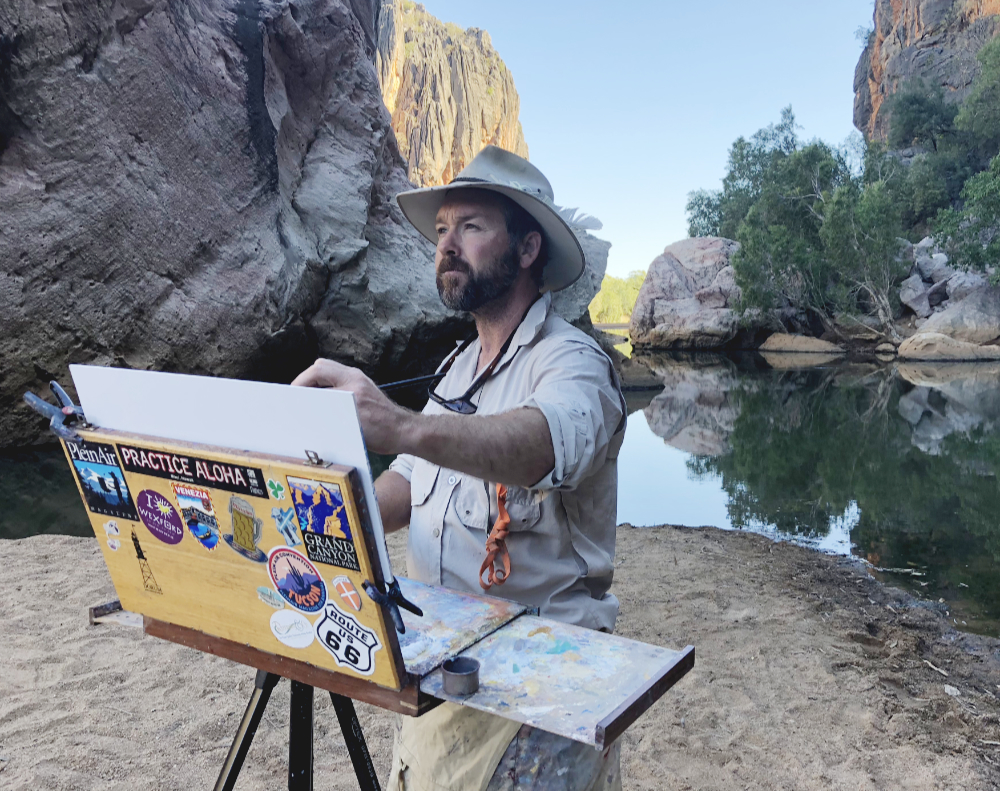
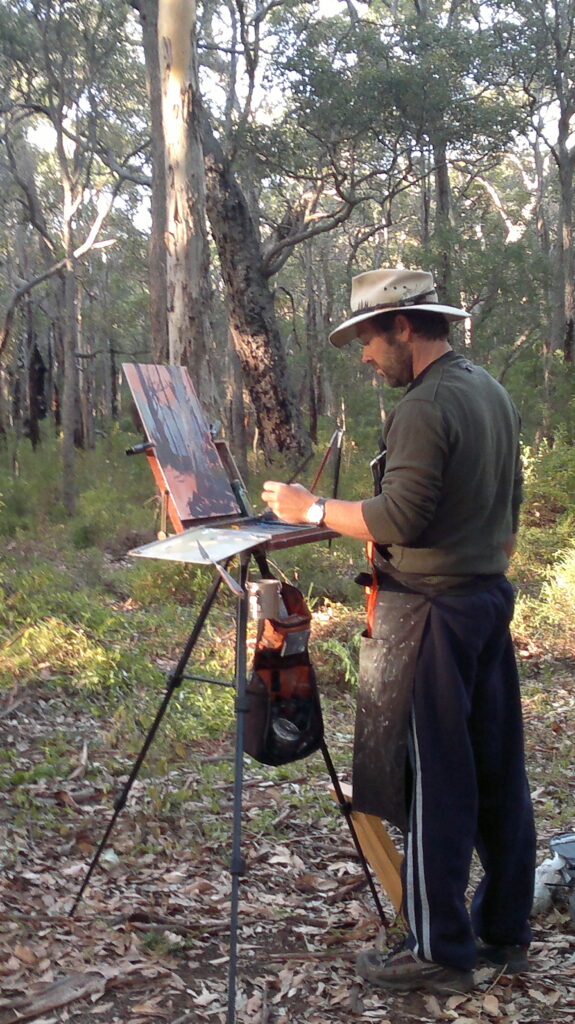
Check out Leon Holmes’ trusted plein air equipment and supplies — a curated collection of tools that support outdoor painting in all conditions.
Leon has tested and refined his kit over years of painting on location across Australia, from compact easels and palettes to brushes, paints and accessories that make plein air painting more enjoyable and effective. Whether you’re new to outdoor painting or looking to upgrade your gear, Leon’s recommendations offer practical guidance for creating your best work in the field.
Leon Holmes’ Tips for Travelling with Wet Paintings
Put all of your equipment in your checked in luggage. Do not take it as carry on, it will save you a lot of questions and problems. Print out the Material Safety Data sheet from your paint manufacturer (found on their website) and highlight the section on safe to fly. Put this in your suitcase with your equipment. NEVER USE THE WORD ‘PAINT’ always refer to it as artist colours.
Again I like to work as light as possible. My preferred surface for traveling are 3-4mm thick panels/boards cut to 2 standard sizes that I can fit in my backpack and also my suitcase. The sizes I use are 20x30cm and 20x40cm. These sizes can both be carried in a 20cm wide carry box but you can make a size that you like…
It is even lighter if you work on canvas alone but I tend to work with a good amount of paint so it is not always dry on the painting when I need to move on and stretched canvases are bulky.
Panel carriers for the day trips – I have two, and it allows me to carry up to four wet paintings during the day in my backpack. I made these myself. Each box has a channel in it that the wet painting can slide into and it can carry two paintings back to back. The channel may mark the painting slightly, however this is rarely noticeable and when it does it is so close to the edge that it is easily touched up or hidden by a frame in the gallery.
The bulk of painting in my Suitcase
The most I have ever traveled with was recently, up to 90 wet and dry paintings in my case. Luckily it was a train trip as it was too heavy for a flight.
When packing many paintings in my case I find that keeping it simple is best. I always carry a roll of Duct Tape with me (it is better than masking), I cut small cubes of wine cork which I place in the corners and halfway points on the edges of my wet paintings. I then place the next wet painting face down on the corks so it is separated from the wet painting below and tape them together at the points of the corks. The next painting goes back to back on top of this and then I repeat the process over and over until I have a stack of wet works. I then tape the stack of works together as a whole to avoid movement in my case, place the stack in a plastic bag to stop paint from contaminating my luggage and pack it in my case with my clothes around it to protect it from damage in transit.
A few additional tips.
Clothes
In the past I would take as many old shirts as I had during the painting trip. At the end of each day I would rip up the shirt and use it the following day for a rag. This kept my weight down on the return trip and made room for the additional spacing between the wet paintings.
I now only take 3 shirts with me, they are quick dry outdoor style shirts (long sleeves for sun protection) . I wash them out each evening and they are dry the next morning. I also wear an apron and am a very clean worker. This I find important when travelling as you don’t want paint in your case or all over your hotel room 
PS: I also wear disposable gloves.
Shipping
I often post the paintings home to save carrying them. When I know I am going to be at an event I will post my equipment so it is there when I arrive. If you have a friend that can help you ask them to pick up any materials you might need that you can not fly with. ie solvents.
Final Note: Keep it simple, keep it light and small. Make yourself comfortable and give your equipment a good test run close to home before testing it in long distance travel. This is my set up today but I am forever refining it 
Leon Holmes